Meet Jords: Rising UK Rapper in an Exclusive Interview
Artikel
10
min.
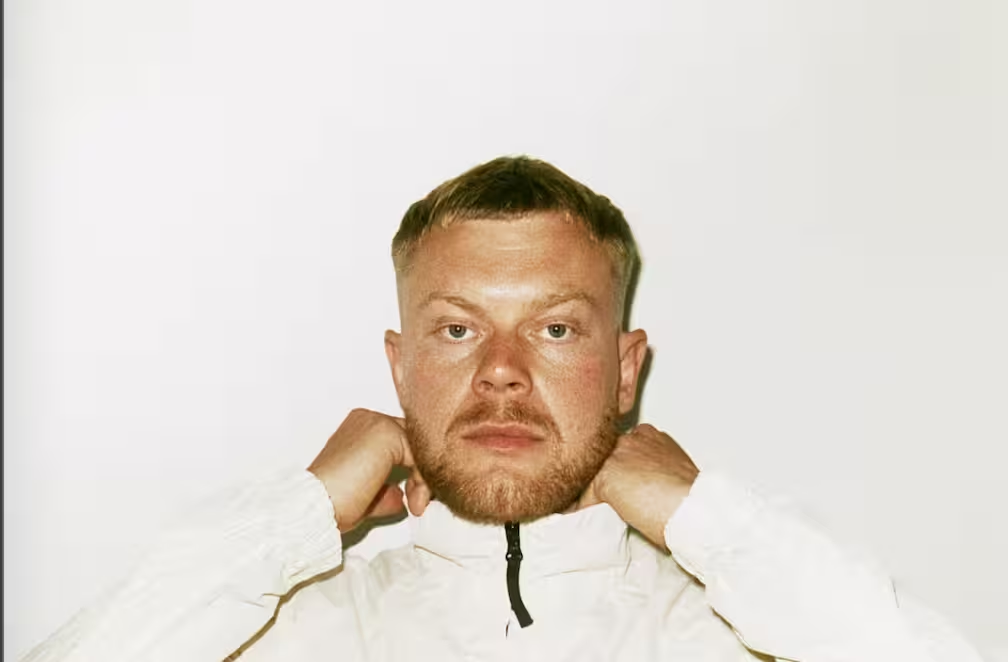
sometimes at Unlimited, we look beyond Denmark’s borders. And when we first heard Jords’ new album ‘Mixtape J’, we just had to dig deeper. So we called up the English rapper to talk about the ideas behind the album, its most meaningful track, and the journey from frustration to freedom.
Let’s start from the beginning - when did the idea for Mixtape J arise, and what did you want to express with it? I started recording it in 2023. Back then, I felt a need to rap more. I was frustrated and needed to let something out. The mixtape became my way of channeling that anger. It was also about dealing with some of life’s harsh realities as you get older. Mixtape J is a safe space. A chance to express yourself without filters. Even during the release process, I was still in the studio - it was constantly evolving.
The project is independently made. How did that affect the process and the sound? I’ve always had freedom when it comes to when, how, and why I release things - and that brings huge peace of mind. It makes the process more organic, less rigid. You get to experiment and carry your ideas all the way through. No one is setting limits.
The first track, “Snake Skin,” has a cinematic, almost spiritual feel. Why did you choose it as the opener? It just sounded right. There aren’t a lot of fast drums, and it has this fire-like energy. It wasn’t something we planned or analyzed - it just felt right, so it became the opening track.
One of the most notable songs is “Reparations.” What’s the message behind it? It’s a pretty direct song. The line “It’s a beautiful day to get paid” speaks for itself. It’s a call-out of the way people are paid in the creative industry, which isn’t always great. We work hard. We’re tired. We need it, and we deserve to be properly paid for our work. There’s always pressure to do more, create jobs, give back… but sometimes, you just need to get paid.
You feature big names - Kojey Radical, Bashy, RV. How did those collaborations come about? It all happened organically. I’ve known Kojey for years - we’ve shared stages, lineups, backstage spaces. We’d just never made anything together until now. I wanted to pull him out of his usual zone and get him rapping - and he was instantly down. Same with the others. When you work independently, everything happens organically.
The mixtape moves between gospel, grime, hip hop, and jazz. How did you approach it sonically? It wasn’t a conscious decision. When I make music, I try to block out the outside world and just be present. I channel what I feel. I grew up with a lot of different genres, so it comes naturally. I play piano, and I really want to learn drums. It all connects.
Was there a song that was particularly personal or hard to write? None were hard to write as such, but “Turn Another Page” hit deep. Some songs were like reliving old things. I can compose well, but getting everything down on paper - that can be the hardest part.
What was the biggest challenge - creatively or personally? Finishing it. That’s always the hardest. You need to be able to complete things. It took a few years. I made the first song in 2023, but finishing the whole thing took a lot of focus. You end up going back and reading the first songs over and over. It’s a process.
You also work with local communities. Has that influenced your music? Yeah, definitely. I’ve worked in prisons, for example. That sticks with you. People have powerful stories that really move you. That affects me, and so it affects the music. When I make music, I’m 100% present with everything I am, so what I experience gets directly channeled into the music.
What’s next for you? I want to tour with the album - but not one of those tours with crazy ticket prices. I want to make it accessible. Something different. I just want to be out there with the listeners. It’s all about being free.
Meet Jords: Rising UK Rapper in an Exclusive Interview
Interview
10
min.
sometimes at Unlimited, we look beyond Denmark’s borders. And when we first heard Jords’ new album ‘Mixtape J’, we just had to dig deeper. So we called up the English rapper to talk about the ideas behind the album, its most meaningful track, and the journey from frustration to freedom.
Let’s start from the beginning - when did the idea for Mixtape J arise, and what did you want to express with it? I started recording it in 2023. Back then, I felt a need to rap more. I was frustrated and needed to let something out. The mixtape became my way of channeling that anger. It was also about dealing with some of life’s harsh realities as you get older. Mixtape J is a safe space. A chance to express yourself without filters. Even during the release process, I was still in the studio - it was constantly evolving.
The project is independently made. How did that affect the process and the sound? I’ve always had freedom when it comes to when, how, and why I release things - and that brings huge peace of mind. It makes the process more organic, less rigid. You get to experiment and carry your ideas all the way through. No one is setting limits.
The first track, “Snake Skin,” has a cinematic, almost spiritual feel. Why did you choose it as the opener? It just sounded right. There aren’t a lot of fast drums, and it has this fire-like energy. It wasn’t something we planned or analyzed - it just felt right, so it became the opening track.
One of the most notable songs is “Reparations.” What’s the message behind it? It’s a pretty direct song. The line “It’s a beautiful day to get paid” speaks for itself. It’s a call-out of the way people are paid in the creative industry, which isn’t always great. We work hard. We’re tired. We need it, and we deserve to be properly paid for our work. There’s always pressure to do more, create jobs, give back… but sometimes, you just need to get paid.
You feature big names - Kojey Radical, Bashy, RV. How did those collaborations come about? It all happened organically. I’ve known Kojey for years - we’ve shared stages, lineups, backstage spaces. We’d just never made anything together until now. I wanted to pull him out of his usual zone and get him rapping - and he was instantly down. Same with the others. When you work independently, everything happens organically.
The mixtape moves between gospel, grime, hip hop, and jazz. How did you approach it sonically? It wasn’t a conscious decision. When I make music, I try to block out the outside world and just be present. I channel what I feel. I grew up with a lot of different genres, so it comes naturally. I play piano, and I really want to learn drums. It all connects.
Was there a song that was particularly personal or hard to write? None were hard to write as such, but “Turn Another Page” hit deep. Some songs were like reliving old things. I can compose well, but getting everything down on paper - that can be the hardest part.
What was the biggest challenge - creatively or personally? Finishing it. That’s always the hardest. You need to be able to complete things. It took a few years. I made the first song in 2023, but finishing the whole thing took a lot of focus. You end up going back and reading the first songs over and over. It’s a process.
You also work with local communities. Has that influenced your music? Yeah, definitely. I’ve worked in prisons, for example. That sticks with you. People have powerful stories that really move you. That affects me, and so it affects the music. When I make music, I’m 100% present with everything I am, so what I experience gets directly channeled into the music.
What’s next for you? I want to tour with the album - but not one of those tours with crazy ticket prices. I want to make it accessible. Something different. I just want to be out there with the listeners. It’s all about being free.
Meet Jords: Rising UK Rapper in an Exclusive Interview
Artikel
10
min.
sometimes at Unlimited, we look beyond Denmark’s borders. And when we first heard Jords’ new album ‘Mixtape J’, we just had to dig deeper. So we called up the English rapper to talk about the ideas behind the album, its most meaningful track, and the journey from frustration to freedom.
Let’s start from the beginning - when did the idea for Mixtape J arise, and what did you want to express with it? I started recording it in 2023. Back then, I felt a need to rap more. I was frustrated and needed to let something out. The mixtape became my way of channeling that anger. It was also about dealing with some of life’s harsh realities as you get older. Mixtape J is a safe space. A chance to express yourself without filters. Even during the release process, I was still in the studio - it was constantly evolving.
The project is independently made. How did that affect the process and the sound? I’ve always had freedom when it comes to when, how, and why I release things - and that brings huge peace of mind. It makes the process more organic, less rigid. You get to experiment and carry your ideas all the way through. No one is setting limits.
The first track, “Snake Skin,” has a cinematic, almost spiritual feel. Why did you choose it as the opener? It just sounded right. There aren’t a lot of fast drums, and it has this fire-like energy. It wasn’t something we planned or analyzed - it just felt right, so it became the opening track.
One of the most notable songs is “Reparations.” What’s the message behind it? It’s a pretty direct song. The line “It’s a beautiful day to get paid” speaks for itself. It’s a call-out of the way people are paid in the creative industry, which isn’t always great. We work hard. We’re tired. We need it, and we deserve to be properly paid for our work. There’s always pressure to do more, create jobs, give back… but sometimes, you just need to get paid.
You feature big names - Kojey Radical, Bashy, RV. How did those collaborations come about? It all happened organically. I’ve known Kojey for years - we’ve shared stages, lineups, backstage spaces. We’d just never made anything together until now. I wanted to pull him out of his usual zone and get him rapping - and he was instantly down. Same with the others. When you work independently, everything happens organically.
The mixtape moves between gospel, grime, hip hop, and jazz. How did you approach it sonically? It wasn’t a conscious decision. When I make music, I try to block out the outside world and just be present. I channel what I feel. I grew up with a lot of different genres, so it comes naturally. I play piano, and I really want to learn drums. It all connects.
Was there a song that was particularly personal or hard to write? None were hard to write as such, but “Turn Another Page” hit deep. Some songs were like reliving old things. I can compose well, but getting everything down on paper - that can be the hardest part.
What was the biggest challenge - creatively or personally? Finishing it. That’s always the hardest. You need to be able to complete things. It took a few years. I made the first song in 2023, but finishing the whole thing took a lot of focus. You end up going back and reading the first songs over and over. It’s a process.
You also work with local communities. Has that influenced your music? Yeah, definitely. I’ve worked in prisons, for example. That sticks with you. People have powerful stories that really move you. That affects me, and so it affects the music. When I make music, I’m 100% present with everything I am, so what I experience gets directly channeled into the music.
What’s next for you? I want to tour with the album - but not one of those tours with crazy ticket prices. I want to make it accessible. Something different. I just want to be out there with the listeners. It’s all about being free.
Med Laura Christensen tilbage i rollen som Christina leverer Råplan en barsk, velspillet og til tider decideret ubehagelig biografoplevelse, der viser, at fortidens ekkoer ikke sådan lader sig forstumme.
Foranderlighed har været en konstant gennem Taylor Swifts 20 år lange karriere. Fra en ung girl next door, der bare gerne ville spille country, til et af nyere tids største popkulturelle fænomener har hun igen og igen genopfundet sig selv – og samtidig cementeret sin position som en af sin generations mest toneangivende popstjerner. Vi tager dig med gennem de æraer, der tilsammen tegner historien om 20 års musikalske forvandlinger og et efterhånden enormt og vidtfavnende bagkatalog.
Vennerne i ’Adults’ er hverken de første og nok heller ikke de sidste til at fare forvirret rundt midt i tyverne. Serien er ganske simpelt sjov, og så siger den samtidig noget ret interessant om de idealer, der kædes uløseligt sammen med tiden før den rigtige voksenhed.
Efterårets blockbustere er snart på vej, og med dem følger stjerner, Oscar-håb, bizarre præmisser og et par film, ingen endnu helt ved, hvor skal placerers. Fra Tom Cruise og Denis Villeneuve til Anthony Bourdain og en teenager med en græshoppe i sit liv er der rigeligt at glæde sig til. Her er ni film, vi holder særligt øje med.